Webinar - Introducing OnPing Plunger - Powered by Pak AI | Oct 29
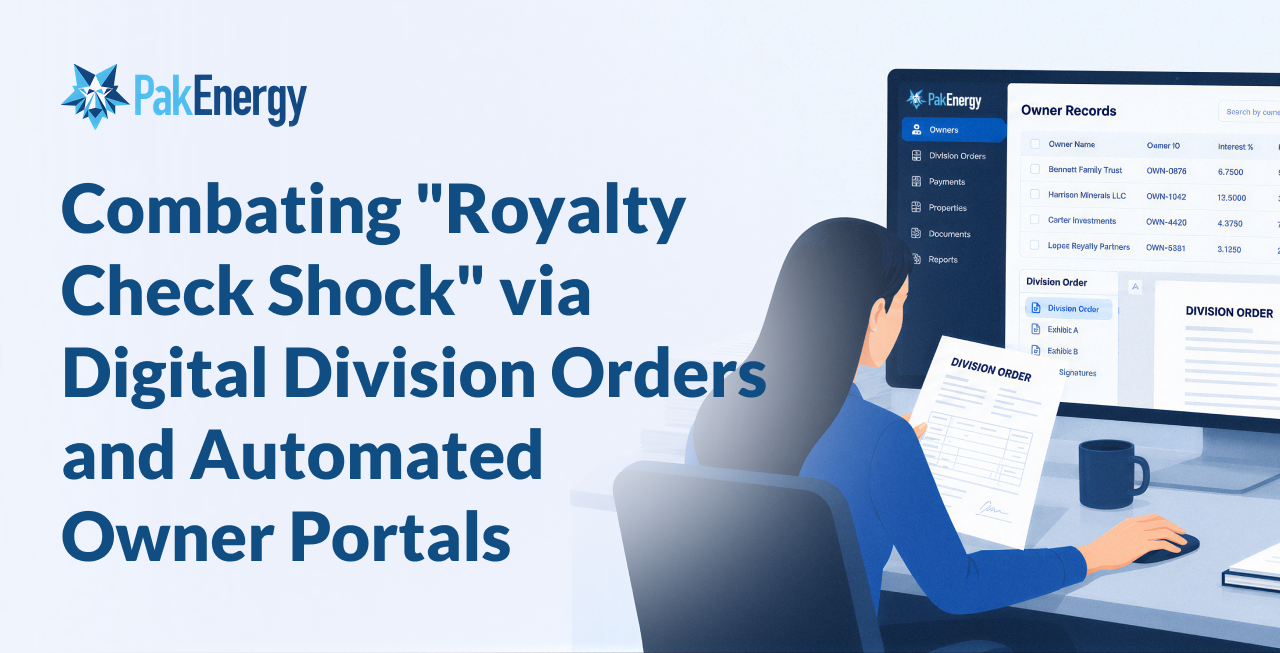
A royalty owner opens a payment and the number is different from what they expected. Maybe the check is smaller. Maybe it never arrived. Maybe revenue is being held while an ownership question gets sorted out. The owner sees one thing: a paycheck problem. Your owner relations team sees everything behind it.
That can mean a division order waiting for a signature, an ownership change, a title question, outdated contact information, a suspense status, or a document sitting somewhere between departments. When the records needed to explain the situation are scattered across paper files, inboxes, spreadsheets, and accounting screens, even a straightforward owner question can turn into a small investigation.
This is where oil and gas owner relations software can change the experience on both sides of the conversation. Digital division orders, centralized owner records, and online document access give owner relations teams a clearer trail to follow, while giving owners more direct access to the paperwork they need. And when money is involved, clarity matters.
Why "Royalty Check Shock" Creates So Much Work for Owner Relations
Most royalty owners do not spend their day thinking about division of interest records, revenue cycles, title documentation, or suspense codes. They notice the outcome. A payment changes. A statement looks unfamiliar. A check they expected does not arrive. Then the phone rings.
For an owner relations manager, the challenge is rarely answering one question. It is finding the information behind that question quickly enough to give the owner a useful answer. PakEnergy describes owner relations inquiries as often arising during stressful events like inheritance, divorce, or a move. In those situations, the person calling may already be dealing with paperwork and uncertainty before a royalty issue enters the picture. The quality of the response depends heavily on how quickly the team can reconstruct what happened.
Paper-heavy workflows make that harder. A division order may have been mailed but not returned. A signed document may have arrived but still need processing. Another department may have information about a title issue. The owner may simply want to know whether a document was received. Each handoff adds friction.
Division Orders Sit at the Center of Many Owner Questions
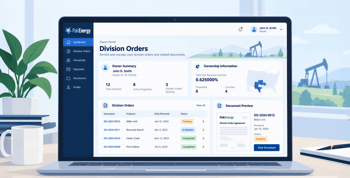 Division orders establish important information used when distributing oil and gas proceeds, including the owner's interest in production. That makes them a natural source of questions when an owner is trying to understand a payment or determine why revenue has not been released.
The NADOA Model Form Division Order includes fields for information like the property, effective date, type of production, owner information, type of interest, and decimal interest. It also addresses written notification of ownership or address changes and circumstances involving title disputes or adverse claims.
State requirements add another layer. For example, royalty guidance from the Railroad Commission of Texas explains statutory requirements involving royalty payments, suspension, division orders, and information royalty owners may request. For the owner relations team, that translates into a practical reality: a missing signature or unresolved ownership issue can affect a process the owner ultimately experiences as a payment issue. That distinction is obvious inside an oil and gas company. It may be anything but obvious to the person waiting for a check.
Paper Division Orders Create Blind Spots
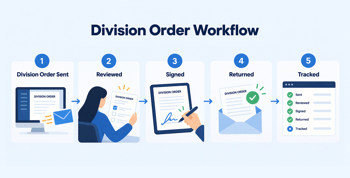
Picture the traditional process. A division order is prepared, printed, placed in an envelope, and mailed. Then the company waits. If the document does not come back, someone has to determine whether the owner received it. If it does come back, staff need to process it and update the appropriate records. If something is incomplete or incorrect, another round of communication begins. Meanwhile, the owner may have little visibility into what is happening.
That is fertile ground for repeat calls. "Did you receive my paperwork?" "Do I need to send it again?" "Why haven't I been paid?" "Who is working on this?" The problem is not that owners ask questions. They should. The problem is forcing both owners and staff to rely on a process where basic document status can be surprisingly difficult to see. Digital division orders create a much cleaner trail.
PakEnergy's Division Order process can queue DOI (Division of Interest) changes for division order letters, track pending orders, assign division order numbers, record returned signed or unsigned orders, and use the return process to update DOI suspense codes. That gives staff a defined workflow rather than a stack of documents whose status has to be pieced together manually. Move that process into a digital exchange, and the owner gets a better experience too.
Digital Division Orders Shorten the Distance Between Question and Answer
PakEnergy Exchange brings division orders into an online workflow. Owners can receive a division order through the portal, open it, review the document, sign it digitally, and return it electronically. The dashboard also gives visibility into division orders that have been sent and unsigned division orders requiring attention. PakEnergy's support documentation shows that owners can access Division Orders, 1099s, Run Statements, and Owner Statements from the Exchange environment. That changes a familiar owner relations conversation.
Instead of trying to determine whether a paper division order is sitting in a mailbox, filing cabinet, or office inbox, the process has a digital status. Instead of mailing another copy because nobody can confidently locate the first one, the document can remain accessible through the portal. A digital signature also removes the trip back through physical mail. For an owner relations manager juggling dozens of open questions, those small changes add up. Less time hunting for document status means more time resolving the issue that caused the inquiry in the first place.
An Owner Portal Gives Owners Somewhere to Look Before They Call
Self-service works best when it answers the questions people actually have. PakEnergy Exchange provides access to owner-facing records including division orders, 1099s, run statements, and owner statements. Documents can be viewed and downloaded, while the dashboard surfaces activity and items that need attention. That matters because a surprising number of owner relations interactions begin with document retrieval.
An owner may need an old statement for their records. Another may be looking for a 1099. Someone else wants to check a division order before calling about an interest. Giving owners a direct route to those documents can remove a basic administrative step from the owner relations team's workload. For the questions that still require a person, staff can start the conversation further ahead.
PakEnergy's Owner Relations CRM adds another piece to that picture. The system is designed to log inbound calls, emails, and mail in a centralized contact database, then route inquiries and documents for review and closure. Instead of treating every phone call as an isolated event, teams can maintain a record of the communication surrounding the owner. This is where oil and gas owner relations software becomes especially valuable. The goal is not to stop owners from contacting the company. It is to give both sides better information when they do.
Suspense Resolution Needs Context, Not Another Spreadsheet
 Suspense is one of those industry terms that can sound routine internally and alarming externally. To an owner, "your revenue is in suspense" may immediately translate to "something is wrong with my payment." The next question is predictable: Why? Answering it can require context from several places.
PakEnergy's accounting documentation shows that owner maintenance provides access to payment and billing history as well as owner suspense information. Its Division Order workflow can also associate certain legal suspense codes with owners waiting on division orders and update the DOI suspense code when a division order is returned. That connection matters.
When owner, division order, payment, and communication information are easier to trace, the team has a better shot at identifying the next action without bouncing between disconnected records. Maybe a signed division order is outstanding. Maybe the issue involves title and needs additional review. Maybe the owner's information needs to be updated. Digital workflows do not magically cure a legitimate title defect or resolve every ownership dispute. They do make the administrative trail easier to follow. That is an important difference.
Better Owner Relations Does Not Mean Removing the Human Element
There is a temptation to frame automation as a way to eliminate calls. That misses the point. Some owner questions are complicated. Some are emotional. An inheritance can involve both title work and a grieving family. A divorce or ownership transfer may require documents the owner has never encountered before. A missing payment can create genuine financial concern. Those conversations deserve a person.
The administrative questions surrounding them do not need to consume the same amount of staff time. If an owner can retrieve a statement without calling, great. If a division order can be signed and returned electronically, even better. If the owner relations representative can see the communication history and document status before picking up the phone, the conversation starts with context instead of detective work. That is where automation earns its place.
Connect the Document Workflow Instead of Digitizing One Piece
Scanning a paper document into a PDF is technically digitization. It does not necessarily fix the workflow. The bigger opportunity comes from connecting the document to what happens next. PakEnergy Exchange is built for oil and gas document management, including the electronic distribution and execution of division order letters through a portal and digital signature workflow. PakEnergy's broader upstream suite connects owner relations with accounting, land, production, and related workflows.
For owner relations teams, that connectivity matters because the owner does not experience those departments separately. A title change may begin with land. A division order may affect how an interest is represented for revenue distribution. A payment question may land with owner relations. Supporting documents may move between several people before the issue is closed. The owner, meanwhile, simply wants an answer. Connected records help the company respond like one organization rather than a collection of disconnected divisions.
What Changes When Owner Documents Become Easier to Track?
The first improvement is visibility. Teams can see where a division order sits in the process instead of relying entirely on physical mail and manual follow-up. Owners can access documents online. Communication history can be recorded rather than disappearing into individual inboxes. Then the work itself begins to change.
A representative who can find an owner's records quickly spends less of the conversation asking colleagues to track something down. A manager can see outstanding items more clearly. An unsigned division order has a status rather than becoming another mystery in the filing system.
This can also make inquiry volume more manageable. PakEnergy specifically positions its Division Order automation around reducing inbound investor calls and improving response times. The logic is straightforward: when routine document access and status questions have clearer digital paths, fewer of those questions need to become manual research projects. No owner relations department is going to reach a magical state where the phones stop ringing. Nor should that be the goal. A better goal is making each call count.
From "Where Is My Check?" to "Here's What Happens Next"
The best owner relations teams cannot control every title issue, ownership change, or payment question that lands on their desk. They can control how quickly the trail becomes clear. Digital division orders remove unnecessary mailing and processing steps from a document that plays an important role in revenue distribution. Owner portals give royalty owners a place to retrieve documents and act on outstanding items. Centralized communication records help staff understand what has already happened before responding again.
Together, those changes make "royalty check shock" easier to handle. An owner calls because something looks wrong. Instead of beginning with, "Let me see if I can find that," the representative has a better chance of explaining what happened, what is outstanding, and what needs to happen next. For an owner waiting on revenue, that clarity carries weight.
For the owner relations team, it means fewer dead ends, fewer repetitive administrative steps, and more room to focus on the situations where their judgment and experience actually matter.
Ready to Give Owner Relations a Clearer Paper Trail?
PakEnergy connects owner relations, division order management, accounting, and digital document workflows so your team can spend less time chasing paperwork and more time resolving owner questions. See how PakEnergy can help your team move division orders and owner documents into a more visible, connected workflow. Schedule Your Demo Today.
FAQs
What is oil and gas owner relations software?
Oil and gas owner relations software helps operators organize owner information, communications, documents, ownership-related workflows, and inquiries. Depending on the platform, it may connect owner relations with accounting, land, division order management, and digital document exchange.
What is a digital division order?
A digital division order is an electronic version of a division order that can be distributed, reviewed, signed, returned, and tracked through an online workflow rather than relying entirely on printed documents and physical mail.
Can royalty owners sign division orders electronically with PakEnergy?
Yes. PakEnergy Exchange supports electronic division order distribution and digital signatures. Owners can open a division order through the Exchange portal, sign it, and return it electronically.
What documents can owners access through PakEnergy Exchange?
PakEnergy's owner support documentation identifies Division Orders, 1099s, Run Statements, and Owner Statements as documents available through the Exchange environment. Owners can view and download documents from the platform.
Can owner relations software resolve revenue suspense automatically?
Not every suspense situation can or should be resolved automatically. Suspense may involve outstanding division orders, title disputes, ownership questions, or other circumstances requiring review. PakEnergy can help teams view relevant owner and suspense information and track division order workflows so the administrative path is clearer.
How can an owner portal reduce owner relations inquiries?
An owner portal gives owners direct access to documents and outstanding items that might otherwise require a phone call or email. That can reduce routine document-retrieval and status inquiries while giving owner relations staff more time for questions that require research or personal assistance.
Does PakEnergy track owner communications?
PakEnergy's Owner Relations CRM is designed to log inbound calls, emails, and mail in a centralized contact database. Inquiries and documents can then be routed for review and closure, giving teams a record of owner interactions.
Sources & Additional Information
- Railroad Commission of Texas Royalties FAQ - https://www.rrc.texas.gov/about-us/faqs/royalties-faq/
- National Association of Division Order Analysts Model Form Division Order - https://www.nadoa.org/wp-content/uploads/2021/11/div_ord.pdf