Webinar - Introducing OnPing Plunger - Powered by Pak AI | Oct 29
Oil and gas land teams handle a never-ending stream of leases and related documentation. Modern energy companies often have complex, wide-ranging portfolios, and for teams still relying on siloed spreadsheets and disconnected systems, it can be hard to keep up. Automated tools in land management software can streamline and simplify the entire process, making life easier for land professionals.
How can land management software maximize lease efficiency in 2026?
Today, land management software offers a better, faster way to manage leases. With centralized records and automated processes, these software tools allow land teams to minimize errors and respond with agility when challenges arise. Furthermore, automating lease management frees up talented professionals to focus on more high-value work instead of combing through databases.
The benefits ripple throughout the entire company, affecting far more than just the land team. Reliable lease data makes cross-functional collaboration much easier, as accounting and operations teams can work with land professionals to maximize the value of their holdings.
What are the common bottlenecks in manual lease tracking?
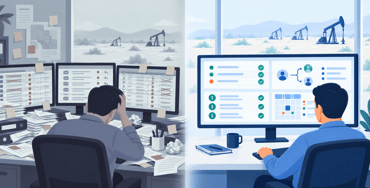 Modern land teams need to keep an eye on much more than just lease expiration dates. Land and mineral ownership tracking, lease payments, extensions, shut-in clauses, and ownership changes are all necessary information, making manual data collection and analysis highly challenging, especially for O&G companies with vast, complex portfolios.
For companies without land management software, several common bottlenecks can arise.
- Disconnected Data: Important details might be scattered across siloed spreadsheets and random email threads.
- Manual Deadline Tracking: Landmen need to monitor lease end dates and set reminders for renewals.
- Duplicated Entries: The same data can live in multiple systems, creating inconsistencies and errors.
- Limited Visibility and Collaboration: Back-office personnel might not have the same access as landmen, making teamwork difficult.
As portfolios expand, these issues only get more problematic. In addition, they can lead to additional downstream bottlenecks, affecting every department across the company.
Why are spreadsheets failing modern land departments?
Simply put, spreadsheets were never meant to act as a centralized database for complex operational information. They’re great for basic tasks, but they don’t notify landmen about key lease terms or remind them of upcoming deadlines. When a single missed obligation can undermine an asset’s value to the company, teams need modern O&G land software to track lease-related considerations under one roof.
Instead of asking each other what they’ve done and what comes next, employees get relevant tasks automatically routed to them via automated land workflows, reducing confusion and rework. This shift from passively tracking info to actively managing processes can dramatically improve land department ROI and company-wide efficiency.
How does automated workflow technology reduce land errors?
Automation supplements the expertise of land professionals rather than replacing it. Automated land workflows trigger routine processes based on certain predefined conditions, saving landmen time and energy. For example, when a document requires approval, the system can automatically route it to the right person and notify them immediately, a process that used to require multiple phone calls or emails.
Owner relations and mineral ownership tracking also become far simpler with the right technology. Instead of combing through several disconnected systems to reveal a tract’s ownership history, those rights all live in the same place. In addition, PakEnergy’s owner relations CRM logs calls and emails for each property, storing that information alongside lease data in the same convenient system.
For land teams, this means improved consistency across the board and more time to spend on value-added, human tasks that can’t be automated. Plus, it makes sure that every task follows a consistent process, no matter where the lease is located or which team members oversee it.
Can GIS integration improve decision-making speed?
GIS integration creates an enhanced mapping environment, giving land professionals a geographical bird’s-eye view of a company’s assets. Landmen can view in-house and third-party vendor data within the same interactive environment, getting a complete understanding of how various interests relate to each other spatially.
The PakEnergy land platform provides cloud-based GIS mapping that lets landmen search and select assets, measure areas, annotate maps, and generate reports in real time. This creates more agile and efficient land teams that can proactively address issues before they arise instead of reacting once they reveal themselves.
What role does cloud accessibility play in field-to-office sync?
Land teams don’t spend eight hours a day, five days a week sitting at their desks. Landmen need access to lease management tools in the field, and back-office teams need timely updates on their end as well.
Cloud-based accessibility gives these teams the access they need, no matter where they are. This reduces the risk of delays and inaccuracies from swapping spreadsheets back and forth or exchanging phone calls between the field and the office. Web-based solutions provide immediate access and streamline cross-functional collaboration, even for teams that are rarely in the same physical space together.
This flexibility directly impacts land department ROI because employees spend less time on routine, repetitive tasks and more time on acquisitions and negotiations. In addition, a lean and agile land team has fewer late payments and missed obligations, making financial planning easier and more reliable for decision-makers.
Is your land management software audit-ready?
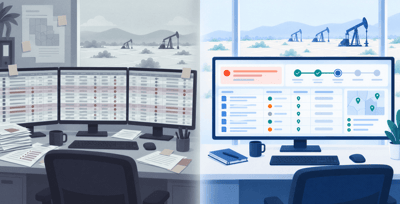 Oil and gas companies need consistent, accessible lease data in an audit-ready system. Instead of wondering what obligations apply to a given property, and who’s responsible for them, land teams have live access to centralized records and supporting documentation.
Not only does this give land professionals confidence that the information they rely on is accurate and timely, but it also creates an audit-ready system with minimal compliance risks. When lease data lives in a central location, even the most complicated portfolio is still easily searchable by employees and auditors alike.
PakEnergy’s land management software provides teams with automated tools to save time and improve profitability, while streamlining compliance with entities like the Office of Natural Resources Revenue (ONRR). Reach out to a PakEnergy team member today to learn more about how we can optimize your company’s lease efficiency and audit preparedness.
FAQs
How long does land software implementation take?
Timelines depend on the size and complexity of your current system and the quality of your existing data. PakEnergy will work with you to build a realistic conversion plan for your land data, and conversion typically happens with no downtime.
Can I migrate legacy lease data?
PakEnergy can import and organize your existing lease and land records. We have experience converting data from every popular O&G land software solution, as well as a wide variety of legacy systems. If you have lease data of some sort, we’ll find a way to convert it.
Does this integrate with my O&G accounting?
PakEnergy offers a comprehensive software suite, integrating various systems from land and production to operations and accounting. With real-time visibility into verified data, your accounting team will have the confidence that every piece of land information is accurate and timely.