Webinar - Introducing OnPing Plunger - Powered by Pak AI | Oct 29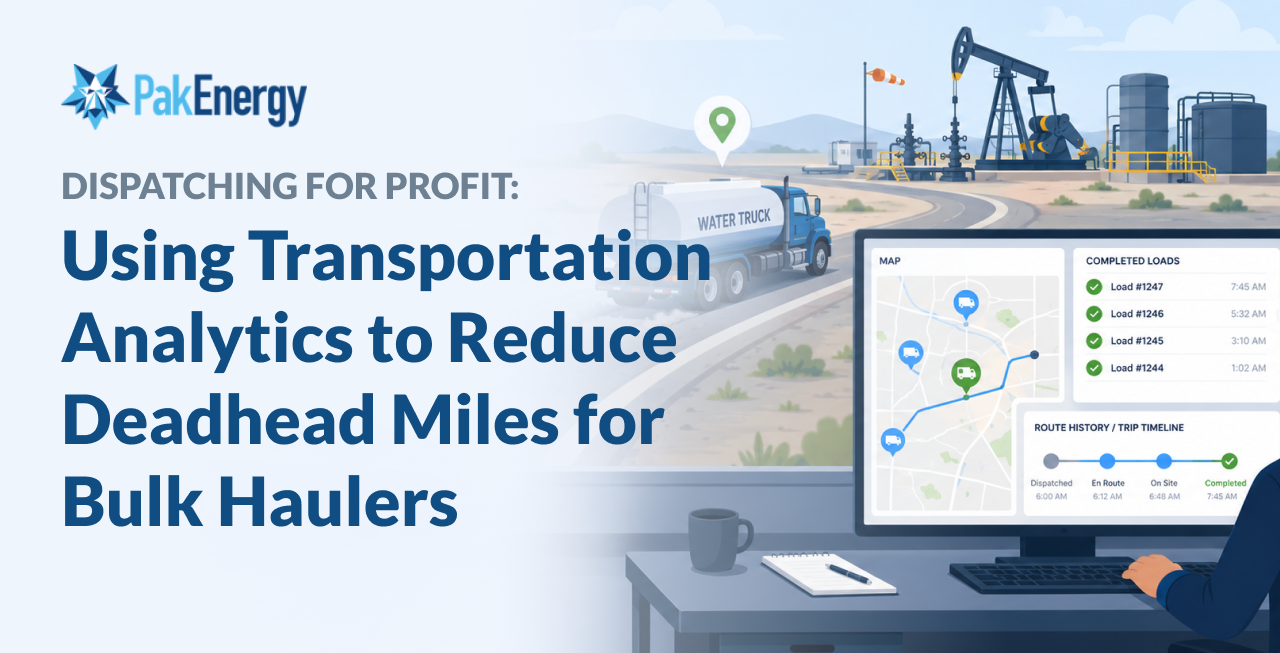
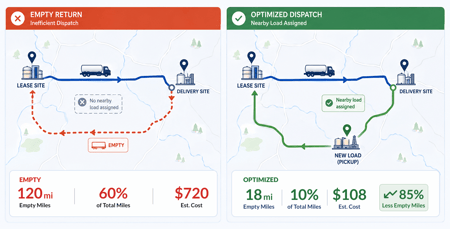
Every dispatcher has experienced the same frustrating moment. A truck completes a delivery, begins heading back across the field empty, and only minutes later another load request arrives nearby. Had the information been available sooner, that return trip could have been avoided.
Those empty miles add up quickly. For midstream operators and bulk haulers, deadhead miles represent more than unused capacity. They consume fuel, increase equipment wear, reduce driver productivity, and limit the number of revenue-generating loads a fleet can complete during a shift. While some empty travel is unavoidable, much of it results from limited operational visibility rather than operational necessity.
The challenge has become even greater as transportation operations grow more complex. Dispatchers manage dozens or even hundreds of trucks across multiple customers, disposal facilities, production sites, terminals, and service areas. Conditions change throughout the day as weather, production schedules, traffic, equipment availability, and customer priorities shift. Making informed dispatch decisions requires more than knowing where trucks were scheduled to go. It requires understanding what is happening across the operation as work unfolds.
That is why more transportation leaders are focusing on operational analytics rather than intuition alone. Historical dispatch information, route performance, load history, and fleet utilization data provide valuable insight into how transportation operations actually perform over time. Combined with improved operational visibility, those insights help dispatch teams identify recurring inefficiencies, reduce unnecessary empty travel, and make better use of existing equipment.
Why Deadhead Miles Matter More Than Many Fleets Realize
Every empty mile represents capacity that could potentially have been used more effectively. Unlike fuel prices or equipment costs, deadhead miles often develop gradually. A truck finishes one assignment and returns to its yard because no additional work has been scheduled nearby. Another driver crosses the same area later that afternoon to complete a different job. Individually, neither trip appears unusual. Across an entire fleet, however, these patterns can quietly increase operating costs while reducing overall productivity.
Transportation managers generally monitor obvious performance indicators such as completed loads, driver hours, fuel consumption, and equipment utilization. Deadhead mileage deserves similar attention because it influences many of those same metrics. Additional empty travel contributes to:
- Higher fuel consumption
- Increased equipment wear
- Reduced available driver hours
- Higher maintenance costs
- Lower fleet utilization
- Fewer completed revenue-generating loads
Reducing unnecessary travel does not necessarily require more trucks or additional drivers. In many cases, it begins with a better understanding of how dispatch decisions are made throughout the day.
Visibility Creates Better Dispatch Decisions
 Dispatching has always required balancing competing priorities. Customers expect timely service. Drivers need productive routes. Operations managers want equipment utilized efficiently. Accounting depends on accurate ticketing and completed load information. The difficulty is that dispatch decisions are only as good as the information available at the time.
In many organizations, dispatchers still rely on phone calls, text messages, radio communications, spreadsheets, and handwritten notes to understand where trucks are located and which assignments have been completed. Those tools may work for smaller fleets, but they become increasingly difficult to manage as transportation activity expands.
Modern transportation management platforms improve operational visibility by bringing together dispatch activity, ticketing, driver information, completed loads, and transportation reporting within a connected workflow. Instead of piecing together information from multiple sources, dispatchers have a more complete view of fleet activity, allowing them to make more informed assignment decisions as conditions change throughout the day.
Looking Back to Improve Tomorrow's Dispatches
Historical transportation data is often viewed as a reporting tool, but it can also provide valuable operational insight. Reviewing previous dispatch activity can reveal patterns that might otherwise go unnoticed. Certain routes may consistently experience delays at specific times of day. Particular disposal facilities may create longer turnaround times than others. Some customers may regularly generate backhaul opportunities that reduce empty travel when recognized early.
These observations do not predict the future with certainty, nor do they replace the experience of seasoned dispatchers. Instead, they provide additional context that helps transportation managers evaluate how today's decisions compare with historical operating patterns.
Organizations that regularly analyze route history, cycle times, fleet utilization, and dispatch performance are often better positioned to identify opportunities for continuous improvement. Over time, these incremental adjustments can reduce unnecessary travel, improve asset utilization, and strengthen overall transportation efficiency.
A Realistic Dispatch Scenario
Imagine a dispatcher managing a fleet of water hauling trucks across multiple production areas. Throughout the morning, drivers complete scheduled deliveries without issue. By early afternoon, however, several trucks begin returning empty to their staging locations while new hauling requests arrive from nearby leases. The dispatch schedule reflects what was planned at the beginning of the day, but it no longer reflects what is happening in the field.
Looking back at several weeks of transportation data reveals a consistent pattern. Certain production areas routinely generate additional hauling requests during the afternoon, while specific disposal facilities experience predictable congestion during peak hours. These trends had always existed, but they were difficult to recognize because dispatch decisions were being made one load at a time rather than evaluated across the broader operation.
With better access to historical dispatch information and improved operational visibility, dispatchers begin making small adjustments to daily load assignments. Trucks finishing work near high-demand areas are held briefly instead of immediately returning empty. Drivers are assigned follow-on work based on current fleet activity and historical demand patterns rather than defaulting to the closest available assignment.
The fleet itself has not changed. The number of drivers remains the same. What improves is the quality of the information supporting dispatch decisions. Over time, those incremental adjustments reduce unnecessary empty travel, improve truck utilization, and allow more revenue-generating loads to be completed during a normal operating day.
Why Better Dispatching Supports Driver Retention
Driver retention is often discussed in terms of compensation and recruiting. Those factors certainly matter, but they are only part of the equation. Professional drivers want productive workdays. They want routes that make sense, clear communication from dispatch, and confidence that their time is being used effectively. Few things create more frustration than driving long distances without a load because information was unavailable or assignments could not be coordinated efficiently.
Well-organized dispatch operations help create a better experience for drivers by reducing unnecessary waiting, minimizing confusion, and providing clearer expectations throughout the day. Drivers spend more time completing productive work and less time wondering where the next assignment will come from.
For fleet owners, these improvements extend beyond employee satisfaction. More efficient dispatching contributes to better equipment utilization, lower fuel consumption, and improved customer service. When dispatchers have greater visibility into fleet activity, they can respond more effectively to changing conditions without creating unnecessary disruption for drivers.
Connecting Dispatch, Ticketing, and Reporting
Transportation operations generate valuable information throughout every shift. Dispatch assignments, completed loads, digital tickets, route activity, driver status, and delivery confirmations all contribute to understanding how the fleet is performing. The challenge is that this information often exists in separate systems. Dispatch may maintain one record of activity. Field personnel document another. Accounting receives completed tickets later in the billing cycle. Operations managers review reports after the work has already been completed. When those workflows remain disconnected, opportunities for improvement are more difficult to identify.
Integrated transportation management software helps connect those activities into a more unified operational process. Completed loads update dispatch records more quickly. Digital ticket information becomes available sooner for billing and reporting. Transportation managers gain a clearer picture of fleet utilization without relying on multiple spreadsheets or manual status updates. The result is not simply faster reporting. It is better operational awareness across the entire transportation workflow.
Continuous Improvement Begins with Better Data
Transportation efficiency rarely improves because of one major operational change. More often, it improves through a series of smaller decisions supported by reliable information. Historical route analysis may reveal recurring congestion at certain facilities. Fleet utilization reports may identify equipment that is consistently underused. Load history may show opportunities to improve scheduling across specific customers or operating areas. Each observation provides another opportunity to refine dispatch practices.
Over time, those incremental improvements help organizations reduce unnecessary travel, improve asset utilization, and strengthen overall transportation performance without significantly expanding equipment or staffing levels. That is why transportation analytics should be viewed as an operational management tool rather than simply a reporting function. Looking back at yesterday's activity helps dispatch teams make better decisions tomorrow.
Practical Steps Dispatch Managers Can Take This Quarter
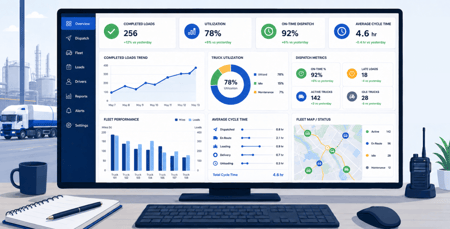 Improving dispatch performance does not require rebuilding transportation operations from the ground up. Many organizations achieve measurable improvements by focusing on operational visibility and consistency. Begin by establishing baseline performance metrics for your fleet. Track completed loads, average cycle times, truck utilization, and estimated deadhead mileage so future improvements can be measured objectively.
Next, review historical dispatch activity to identify recurring patterns. Look for routes that consistently generate empty return trips, disposal locations with longer turnaround times, or service areas that regularly create backhaul opportunities. Evaluate how dispatch information is shared across operations, field personnel, and accounting. Reducing duplicate data entry and improving access to transportation information helps create a more complete operational picture.
Finally, encourage dispatch teams to use historical performance as one input in daily planning. Experience will always play an important role, but historical transportation data provides additional context that supports better decision-making over time. Small improvements made consistently often produce meaningful operational gains.
The Bottom Line
Every transportation operation includes some level of unavoidable empty travel. The objective is not to eliminate every deadhead mile. It is to identify where unnecessary travel occurs and create processes that reduce it whenever practical.
Transportation managers who combine experienced dispatching with stronger operational visibility and transportation analytics are better equipped to improve fleet utilization, reduce operating costs, and increase the number of productive loads completed each day.
The greatest opportunity is often not adding more equipment. It is making better use of the equipment already on the road. By connecting dispatching, ticketing, transportation reporting, and historical performance data, organizations create a stronger operational foundation that supports more informed decisions and continuous improvement across the entire fleet.
Learn how PakEnergy Transportation Management Software helps oil and gas operators connect dispatching, ticketing, transportation reporting, and operational visibility within a single workflow. By bringing transportation information together, dispatch teams can make more informed decisions, improve fleet utilization, and support more efficient day-to-day operations.
FAQs
What are deadhead miles?
Deadhead miles are the distance a commercial vehicle travels without carrying a revenue-generating load. While some empty travel is unavoidable, reducing unnecessary deadhead miles can improve fleet utilization and operating efficiency.
How can transportation management software help reduce deadhead miles?
Transportation management software improves visibility into fleet activity, dispatch assignments, completed loads, and transportation reporting, allowing dispatchers to make more informed routing decisions and identify opportunities to reduce unnecessary empty travel.
Why is dispatch visibility important?
Dispatch visibility provides transportation managers with a clearer understanding of truck locations, completed work, available capacity, and fleet activity, helping them respond more effectively to changing operational conditions.
How does transportation analytics improve fleet performance?
Transportation analytics help organizations evaluate historical routes, cycle times, truck utilization, and dispatch performance. These insights support continuous operational improvements and more informed planning.
Can reducing deadhead miles improve driver retention?
While compensation and workplace culture remain important, productive dispatching can contribute to a better driver experience by reducing unnecessary travel, minimizing downtime, and creating more efficient daily schedules.
What information should transportation managers monitor?
Transportation managers should regularly review completed loads, truck utilization, cycle times, dispatch performance, route history, digital ticket completion, and operational reporting to identify opportunities for continuous improvement.
Additional Information
- Alternative Fuels Data Center U.S. Department of Energy - https://afdc.energy.gov/
- Federal Motor Carrier Safety Administration (FMCSA) U.S. Department of Transportation - https://www.fmcsa.dot.gov/