Webinar - Introducing OnPing Plunger - Powered by Pak AI | Oct 29
Anyone who’s worked in oil and gas accounting knows the pressure. Dollars flow through countless hands, partners expect precision, and audits can feel endless. But a surprising number of teams are still managing all that with nothing more than spreadsheets, a system that worked once, but not anymore.
Meanwhile, a growing group of operators are quietly pulling ahead. These are the early adopters, finance teams that saw the warning signs early and modernized with oil and gas accounting software built for speed, compliance, and scale. The results speak for themselves: faster closings, stronger cash flow, and confidence in every number.
The Reality of Lagging Behind
Oil and gas companies are inherently cautious. That caution keeps operations safe, but in accounting, it can turn into stagnation. Manual processes lead to:
- Month-end bottlenecks: data scattered across spreadsheets and shared drives.
- Costly errors: decimals misplaced, formulas broken, or duplicate entries.
- Audit stress: documentation that’s fragmented or missing trails.
- Missed opportunities: financial data that’s too slow for strategic decisions.
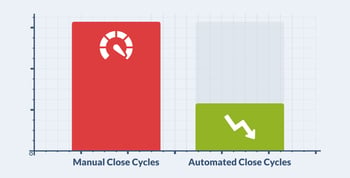
Missed opportunities happen when financial data arrives late. Multiple surveys show that teams still relying on spreadsheets and manual steps face slower, more error-prone closes, while automated workflows shorten cycle time and improve accuracy.
What Early Adopters Did Differently
Forward-thinking finance leaders didn’t overhaul everything overnight. They took a measured approach:
- Mapped existing processes - JIB, AFE, revenue distribution, and regulatory filings.
- Identified high-risk manual steps - the tasks most prone to error or delay.
- Implemented cloud-based automation to remove those choke points.
By shifting to petroleum accounting software that connects land, production, and financial data, these teams achieved real-time visibility from the oilfield to the finance office.
-
Speed and Accuracy Become Strategic Advantages
Faster close cycles free accounting teams to analyze, rather than reconcile. A controller at a Texas-based independent operator noted that after automating JIB and owner disbursements, "what used to take ten days now takes three." Automation also reduces manual touchpoints meaning fewer chances for error, better audit trails, and immediate variance alerts. Early adopters translate that speed into confidence during investor meetings and board reviews.
-
Compliance and Upstream ERP Accuracy
Regulatory requirements like OGOR/ONRR-4054 and 1099 filings demand precision. With upstream ERP systems, compliance checks run continuously instead of reactively. Reports generate automatically with timestamped logs, supporting SOX-ready audit trails. When compliance is baked into the workflow, teams can focus on strategy instead of chasing paperwork.
-
Real-Time Data Enables Smarter Decisions
Early adopters no longer wait for the month-end close to see cash positions. Live dashboards display production volumes, owner payments, and expense allocations in real-time. This visibility enables CFOs to identify anomalies instantly, such as a mis-coded expense, a production variance, or delayed revenue recognition, and take corrective action before it affects performance. Reuters, CERAWeek coverage (2025): industry executives say, "AI and real-time analytics are making production faster and cheaper; companies that do not adopt risk being left behind."
-
Scalability Without Added Headcount
Growth through acquisition used to mean hiring more accountants. Cloud systems changed that. With a scalable SaaS solution like the PakEnergy Platform, companies can onboard new entities, leases, and owners without rebuilding charts of accounts or duplicating workbooks. The same small team can manage triple the volume, providing a direct boost to margins.
-
Integration Across Departments
Modern platforms don’t stop at accounting. They connect production, land, and transportation data, thereby integrating previously isolated departments into a single information flow. For example, when production data feeds directly into revenue allocation, the accounting team gains instant accuracy without having to wait for emailed run tickets. That integration cuts days off the close and aligns finance with field operations.
-
The Human Side: Talent Retention and Morale
Younger accounting professionals expect modern tools. Early adopters report higher retention and easier recruiting because their tech stack feels current. Replacing repetitive data entry with analytics and exception management gives teams more fulfilling work and a subtle but powerful advantage in a competitive labor market.
Case Snapshot: Competitive Gains in Action
A mid-sized operator in Oklahoma modernized its accounting stack in 2023 using a cloud-based oil and gas accounting software suite.
Results within six months:
- 60 percent reduction in manual journal entries.
- Month-end close cut from nine days to four.
- 99 percent accuracy on partner billing.
- Staff redeployed to forecasting and scenario planning.
-
Early Adoption Becomes a Market Signal

Investors and auditors increasingly view automation as a marker of maturity. Companies with modern systems demonstrate governance discipline and operational readiness for growth. In a sector defined by volatility, reliability becomes a differentiator. Early adopters can produce accurate financials, respond to due diligence requests in hours, and attract partners who value transparency.
How to Join the Leaders
Getting started doesn’t require a massive transformation. PakEnergy’s approach focuses on phased implementation, beginning with the modules that create the highest ROI:
- Automate JIB and revenue distribution.
- Digitize AFE approvals and AP/AR workflows.
- Connect field data for real-time production feeds.
- Scale to full ERP integration at your pace.
Each phase builds measurable efficiency while maintaining business continuity.
The Bottom Line
Early adopters aren’t just saving time. They’re redefining what efficient finance looks like in oil and gas. While others fight through spreadsheets, these teams enjoy real-time data, audit-ready accuracy, and scalable growth.
The gap between early adopters and laggards continues to widen each quarter. The question isn’t whether modernization pays off, it’s how much longer it can be postponed.
FAQs
Q: Why should I switch to cloud accounting for oil and gas?
A: Cloud platforms offer real-time data access, automatic regulatory updates, and the ability to scale without adding headcount, unlike on-premise solutions or spreadsheets.
Q: What is the main benefit of automated JIB and revenue distribution?
A: Automation reduces human error in complex calculations, speeds up month-end closes, and ensures partners are billed accurately and on time.