Webinar - Introducing OnPing Plunger - Powered by Pak AI | Oct 29
While competing in a capital-intensive, highly regulated sector, oil and gas companies rely on specialized accounting practices to generate accurate, timely, and compliant financial reports. With a primary focus on tracking income and expenses, traditional accounting cannot handle the complexities that define the dynamic O&G accounting landscape.
Businesses must leverage industry-specific accounting tools, including oil and gas accounting software, to ensure financial reporting transparency and maintain compliance in a highly regulated sector.
What Makes O&G Accounting Unique?
Diverse Market Segments
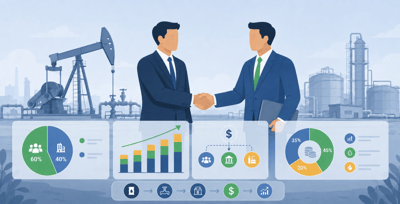 The oil and gas industry includes three segments: upstream (exploration and production), midstream (transportation and storage), and downstream (refining and marketing). Each segment has unique financial considerations that must be accounted for.
Different Accounting Methods
Traditional accounting relies on two main methods: accrual and standard costing. Conversely, O&G accountants typically use either the Successful Efforts (SE) method or the Full Cost method.
Assets Rather than Expenses
Traditional accounting is all about recording expenses as they occur. Conversely, O&G accounting prioritizes intangible cost vs. tangible costs and capitalizing assets, representing investments in long-term resources, such as wells, pipelines, and vehicles, which are then depreciated while in use.
Joint Venture Agreements
Common in the oil and gas industry, joint ventures create unique accounting challenges, such as Joint Interest Billing (JIB), cash calls, and cost and revenue recognition and allocation. Businesses must also comply with industry-specific accounting guidelines and financial reporting rules that vary by jurisdiction.
Uncertainty of Reserves
Unlike manufacturing businesses with readily available raw materials, O&G companies face much uncertainty about the quality and quantity of their reserves. Because exploration efforts may fail to yield viable results, specialized accounting methods are needed to estimate the value of reserves.
Lengthy Production Cycles
The time between exploration and production can be substantial. Upstream operators must account for extended timelines and the allocation of costs incurred during exploration.
How Specialized Accounting Software Can Help
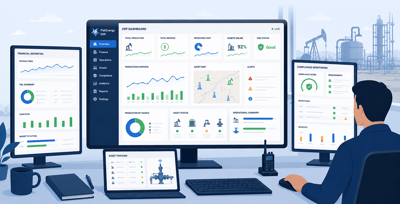 Companies that leverage oil and gas accounting software reap numerous benefits. By digitizing and securely storing data and automating complex calculations, today’s platforms enable O&G accountants to generate timely and transparent financial reports with pinpoint accuracy.
PakEnergy – Smart Accounting Solutions for Upstream and Midstream O&G Businesses
Accounting for oil and gas complexities doesn’t have to be complicated. Built for upstream and midstream companies, PakEnergy’s O&G accounting software seamlessly integrates workflows and processes, creating a unified system that allows your teams to work smarter and faster. With features like customizable dashboards, natural data entry, and bank-grade security, our ERP platform scales to your operations so you can focus on what you do best: running a successful O&G business.
Ready to discover how PakEnergy Accounting can help your energy business thrive? Schedule a free demo today today and take the first step towards optimizing your financial operations.