Webinar - Introducing OnPing Plunger - Powered by Pak AI | Oct 29
 The modern oil and gas industry is one of frequent mergers and acquisitions (M&A). With many operators juggling hundreds or even thousands of assets across sprawling portfolios, companies that still rely on antiquated manual record-keeping methods are at a competitive disadvantage.
Today’s top operators leverage sophisticated, data-driven processes supported by advanced land management software. This digital revolution has reshaped how leading oil and gas operators approach exploration and leasing, making land teams more agile and efficient.
The Early Days of Paper Maps and Manual Record-Keeping
When oil and gas exploration first took off in the U.S., land acquisition was a manual process that relied on physical maps and handwritten contracts to clarify surface and mineral rights. Landmen spent long hours in courthouses, poring over physical documents to validate ownership records. With no centralized data or standardized entry methods, the risk of error was sky-high on nearly every transaction.
Scalability in this era was difficult due to these manual land administration efforts. As M&A activity expanded operators’ portfolios, it became increasingly challenging for oil and gas land administration teams to track lease expirations and ownership rights.
The Introduction of Land Management Solutions
By the late 20th century, most land teams had adopted digital data management tools, at least to some degree. Many of these tools involved siloed spreadsheets and disconnected databases, but it was a big step in the right direction. Still, these land management solutions were mostly generic and not specifically tailored for the complexities of the energy sector.
Soon, oil and gas companies would experience the benefits of specialized land management software solutions.
Today’s Integrated Oil and Gas Land Management Software
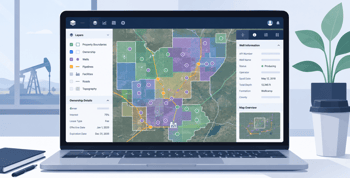 The modern energy landscape has moved beyond isolated spreadsheets to advanced, purpose-built land management software for the oil and gas industry. These comprehensive platforms centralize land data, streamlining due diligence and compliance efforts.
Oil and gas land management software offers features like records management, GIS mapping integration, and cloud-based collaboration. Spatial data integration through GIS systems has been a particularly important development, as land professionals can easily overlay ownership maps and asset locations with intuitive visualization tools. This provides land teams with a holistic view of company-wide assets while simplifying exploration and development processes.
The Role of Land Management Software in Regulatory Efforts
M&A activity brings about important regulatory compliance requirements. Federal agencies like the Bureau of Land Management, along with state and local regulatory bodies, oversee land use and leasing regulations. Compliance is essential, and it’s often far from simple.
Thankfully, the same land management solutions that help teams perform due diligence for M&A transactions can also assist with compliance. These platforms offer automated alerts for regulatory deadlines and streamlined workflows that align with compliance standards, helping land teams reduce risk and avoid costly penalties.
PakEnergy: The Future of Land Management Software Tools
As the energy industry’s digital revolution continues, AI and machine learning tools are helping land teams reduce manual tasks and improve the accuracy of land records. These advancements are further enhancing land teams’ ability to navigate M&A activity with confidence, knowing any deal they make is built on a foundation of reliable contract data.
With PakEnergy, land administration departments have access to collaborative, cloud-based solutions, integrated with a suite of tools for teams in finance, operations, and more. Book a free demo with one of our experts to find out how PakEnergy’s land management software solutions can help your land team better prepare for acquisitions.
The Energy Deals That Defined the Year & What They Signal for 2026
Watch energy analyst Tim Pawul break down the acquisitions, partnerships, portfolio shifts, and overlooked transactions shaping the future of the industry.
Watch the On-Demand Webinar »