Webinar - Introducing OnPing Plunger - Powered by Pak AI | Oct 29
 Oil and gas companies face unique accounting challenges due to the complex nature of their operations. Businesses that rely on standard bookkeeping software may encounter numerous accounting hurdles, leading to financial reporting delays and discrepancies that threaten their profitability and credibility.
Businesses that transition to purpose-built O&G accounting tools are better positioned to sustain cash flow and solidify stakeholder trust by generating timely, accurate, and compliant financial reports.
Limitations of Basic Bookkeeping Software in O&G Accounting
Standard bookkeeping software is not built to handle complex oil and gas accounting functions, such as Joint Interest Billing (JIB) and Authority for Expenditure (AFE) tracking, in accordance with Accounting Standards Codification (ASC) 606. Most basic platforms cannot integrate real- time production, sales, and cost data from field devices with SCADA, leading to inaccuracies and inconsistencies in revenue recognition and reporting.
Additionally, simple software can’t manage multi-entity operations and high-volume transactions that define the O&G sector. Many generic platforms also lack robust security measures, exposing businesses to breaches, system failures, and data loss.
Transitioning to Energy Accounting Software: A Step-by-Step Guide
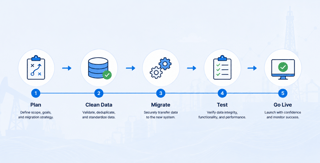
Clarify Goals and Select Software
First, consider your operational needs and must-have features, such as automated JIB, production revenue tracking, robust security, system integration, audit trails, and customizable reports. Research software vendors and choose a platform that aligns with your requirements.
Finalize a Cutoff Date
Next, set a date to transition from your old system to the new one. The end of a fiscal quarter or year often works best for maintaining clean reporting periods.
Prepare and Back Up Data
Before transitioning, securely back up all your data. Clean and organize your financial records, customer and vendor information, and historical transactions. Decide which historical data to import and which to archive offline.
Map and Migrate Data
Determine how to map current data to the new system’s structure, prioritizing complex items like your Chart of Accounts (COA) and master files. Leverage the new software’s import tools and consider running parallel systems briefly to ensure a smooth transition.
Test and Validate
Before going live, establish a secure environment to test migrations and validate the accuracy of the transferred data. Compare trial balances and key reports from both systems to validate the accuracy of the migrated data.
Educate Your Teams
Provide comprehensive training for all employees who will use the new system. Many software vendors offer in-house or online training sessions.
Track and Refine
Once live, monitor system performance, request user feedback, and perform regular audits to ensure reporting accuracy and compliance.
Seamlessly Transition with PakEnergy’s Purpose-Built Accounting Tools
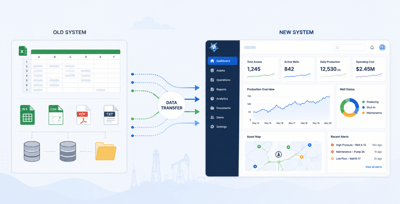 Transitioning to oil and gas accounting software doesn’t have to be difficult. PakEnergy’s automated tools are built to handle energy accounting complexities with ease, including JIB, revenue recognition, and AFE tracking. With features like bank-grade security, seamless workflow integration, natural data entry, and customizable reports, our intuitive platform streamlines accounting processes so you can focus on growing your business.
Ready to empower your business with PakEnergy Accounting? Schedule your free demo today to learn more about our transformative, purpose-built energy accounting tools.