Webinar - Introducing OnPing Plunger - Powered by Pak AI | Oct 29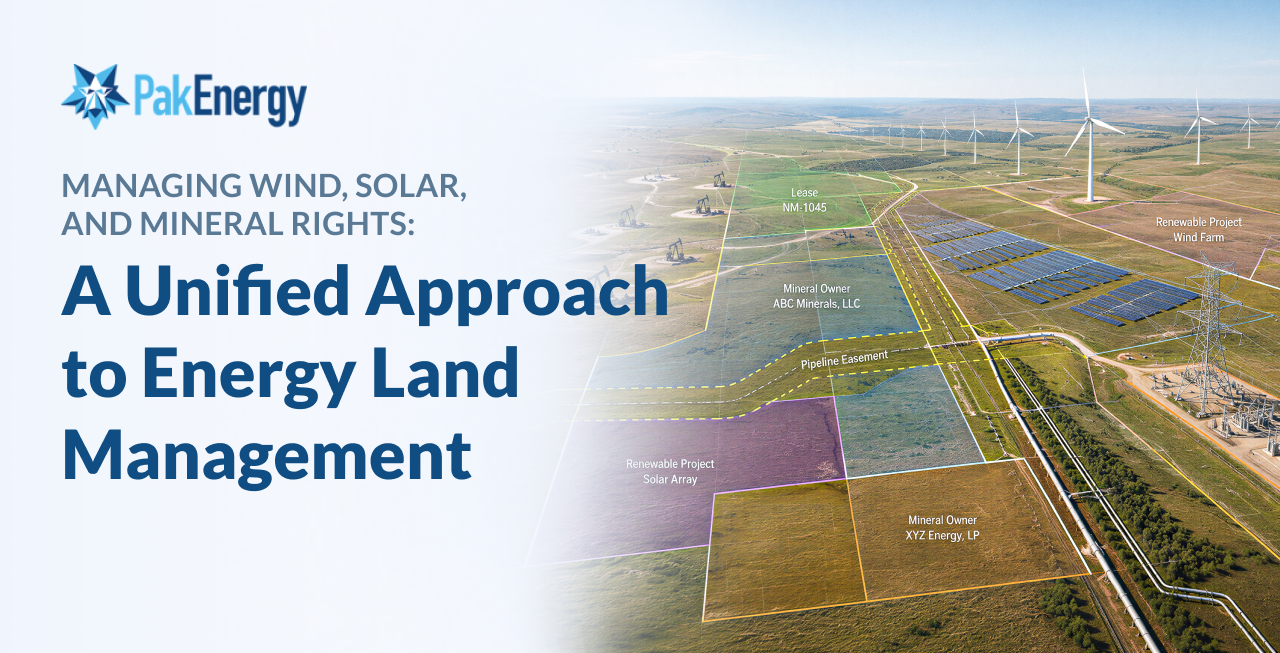
For decades, land departments were built around a familiar mission. They managed mineral ownership, negotiated leases, maintained title records, tracked obligations, and supported the development of oil and gas assets. Those responsibilities remain fundamental today, but the landscape surrounding them has changed dramatically.
Many operators are no longer focused on a single type of energy development. Wind projects, utility-scale solar facilities, battery storage, carbon management initiatives, and transmission infrastructure are becoming part of broader energy portfolios that often overlap with existing oil and gas operations. The result is a more diverse asset base, more stakeholders, and significantly more information for land teams to manage.
For energy investors and executive leadership, this evolution presents both an opportunity and a challenge. Diversification can strengthen long-term portfolio value, but only if organizations can manage increasingly complex land records with the same confidence they once applied to traditional oil and gas development.
That is why unified energy land management has become an important strategic capability. Rather than maintaining separate systems for mineral ownership, renewable leases, GIS mapping, and owner relations, many organizations are looking to centralize land information within a connected operational platform.
Why Land Portfolios Are Becoming More Complex
The transition toward a more diversified energy landscape does not mean oil and gas development is disappearing. Instead, many organizations are managing multiple forms of energy production across the same regions, and sometimes across the same properties.
A single tract of land may include producing wells, gathering systems, pipeline easements, transmission corridors, and surface agreements while also being evaluated for wind turbines or utility-scale solar development. Each project introduces additional documentation, contractual obligations, regulatory considerations, and stakeholder relationships. This growing complexity is changing the role of land management.
Instead of tracking one type of lease or one category of ownership, land professionals increasingly need to understand how multiple property interests interact across an evolving portfolio. Surface rights, mineral rights, renewable leases, easements, rights-of-way, and operational infrastructure all become part of the same decision-making process. Without organized land records, even straightforward projects can become more difficult to evaluate.
One Property, Multiple Stakeholders
Modern energy projects rarely involve only one owner or one operating company.
- Surface owners
- Mineral owners
- Operators
- Renewable developers
- Transmission providers
- Pipeline companies
- Government agencies
- Financial partners
Each party may have legitimate interests in the same property, and each relies on accurate documentation to understand their rights and responsibilities. The challenge for land teams is not simply maintaining documents. It is preserving the relationships between those documents so future decisions can be made with confidence. When ownership records, GIS mapping, title documentation, lease obligations, and owner communications remain disconnected, organizations spend more time reconstructing history than planning future development.
Why GIS Has Become the Foundation of Modern Land Management
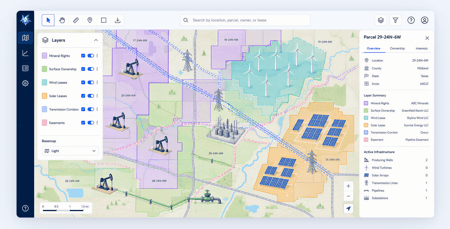 Legal descriptions remain essential, but they rarely tell the complete story. Geographic Information Systems provide the spatial context that allows land professionals to understand how assets, ownership interests, infrastructure, and development opportunities intersect across a portfolio.
Rather than reviewing separate maps, spreadsheets, and document repositories, land teams can visualize mineral ownership alongside surface ownership, producing assets, renewable project boundaries, transmission corridors, easements, and environmental constraints. That geographic perspective often reveals opportunities and potential conflicts long before development begins.
For investors evaluating diversified energy portfolios, GIS also provides a more comprehensive understanding of how different assets relate to one another across an entire operating region.
A Realistic Portfolio Management Scenario
Consider an operator that has spent decades developing oil and gas assets across a large acreage position. The company maintains producing wells, pipeline easements, gathering infrastructure, and long-standing mineral leases across several counties. As part of a broader growth strategy, leadership begins evaluating opportunities to lease portions of the surface estate for utility-scale solar development while preserving existing oil and gas operations.
At first, the opportunity appears straightforward. Much of the surface is suitable for solar, and the company already has strong relationships with landowners. As planning begins, however, additional considerations emerge.
Some tracts contain active pipeline corridors that limit where solar infrastructure can be placed. Existing surface use agreements reserve access for future drilling locations. Certain parcels involve split-estate ownership, requiring coordination between surface owners and mineral owners. Transmission easements cross several properties, and historical lease amendments contain provisions that influence future development. None of these issues prevent the renewable project from moving forward. They simply require better coordination and a complete understanding of how every agreement affects the property.
Because the company's land records, GIS mapping, title documentation, and owner communications have been centralized, the land team can quickly identify overlapping interests, evaluate potential conflicts, and collaborate with legal counsel, operations, and renewable developers before construction planning begins. The portfolio becomes more diverse without becoming more difficult to manage.
Why Centralized Land Records Support Diversified Energy Portfolios
As organizations expand into multiple forms of energy development, the amount of information associated with each property grows significantly.
Traditional oil and gas records remain essential, but they are no longer the only documents influencing development decisions. Examples include:
- Renewable leases
- Surface use agreements
- Transmission easements
- Environmental studies
- Pipeline rights-of-way
- Title opinions
- Owner correspondence
- GIS mapping
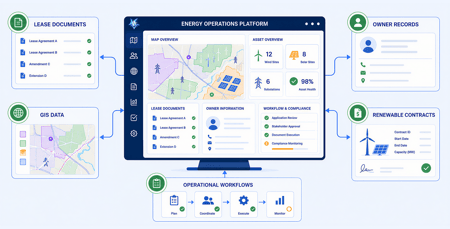
Each document contributes important context, yet too many organizations still manage this information across separate filing systems, shared drives, spreadsheets, and email archives. Centralized land records management creates a more complete picture of every property by connecting documentation to the assets, ownership interests, and operational activities it supports.
Instead of searching multiple systems to understand a property's history, land professionals can evaluate lease obligations, ownership records, GIS information, supporting documents, and communication history within a connected operational environment. That efficiency becomes increasingly valuable as portfolios continue to grow.
Managing Owner Relationships Across Multiple Energy Assets
Diversified portfolios introduce more than additional documentation. They also introduce additional relationships. A single property may involve surface owners, mineral owners, operators, renewable developers, utility companies, financial partners, and government agencies. Each stakeholder has different priorities, timelines, and responsibilities. Maintaining productive relationships requires more than accurate contracts. It requires consistent communication.
Questions about access agreements, lease obligations, title updates, or construction schedules often arise long after the original negotiations have concluded. If communication history is fragmented across individual email accounts or personal notes, future project teams may struggle to understand why certain decisions were made.
Centralized owner relations provide valuable continuity by preserving conversations alongside the land records they support. Future employees can review previous discussions, understand historical context, and continue negotiations without starting from the beginning each time responsibilities change. That continuity strengthens relationships while reducing the likelihood of misunderstandings during future development.
Why Investors Value Better Land Intelligence
Energy investors increasingly evaluate organizations on more than production volumes alone. They also consider operational resilience, portfolio flexibility, and the company's ability to adapt to changing market opportunities. A diversified land portfolio can represent a significant competitive advantage, but only if leadership understands exactly what rights exist across those assets and how those rights interact.
Centralized GIS mapping, organized title records, and connected land documentation provide executives with greater confidence when evaluating acquisitions, divestitures, renewable partnerships, or infrastructure investments. Instead of relying on fragmented reports assembled from multiple departments, decision-makers have access to a more complete operational view of the portfolio. That visibility supports better planning while reducing uncertainty during due diligence and long-term capital allocation.
Technology Supports Better Decisions, Not Different Rights
Technology does not change property ownership. It does not replace legal analysis. It does not eliminate the need for experienced land professionals. What it can do is organize information in a way that makes those professionals more effective.
Integrated oil and gas land management software helps organizations centralize land records, document management, GIS integration, workflow management, and owner relations so project teams can access the information they need without searching through disconnected systems.
As companies continue expanding into wind, solar, and other forms of energy development, having accurate, organized land information becomes increasingly important for every department involved in planning and execution.
Practical Steps for Land Teams and Investors
 Organizations preparing for more diversified energy portfolios can begin strengthening their land management practices today.
Start by identifying where ownership records, title documents, renewable agreements, and GIS information are currently maintained. If critical information exists in multiple locations, creating a centralized record should become a priority. Review properties where multiple forms of energy development already exist or may be planned in the future. Mapping those assets together often reveals opportunities or potential conflicts that individual records cannot.
Evaluate owner communication practices to ensure correspondence, agreements, and historical decisions remain accessible as personnel and projects evolve. Finally, encourage collaboration between land, legal, operations, engineering, and executive leadership. Diversified energy portfolios affect every part of the business, and the strongest decisions are made when everyone is working from the same information. These improvements help organizations prepare not only for today's projects, but also for the broader evolution of the energy industry.
The Bottom Line
The future of energy development is becoming increasingly interconnected. Oil and gas operations continue to play a critical role while wind, solar, transmission infrastructure, and other energy projects expand across many of the same landscapes. For operators and investors alike, the question is no longer whether portfolios will become more diverse. It is whether the systems supporting those portfolios can keep pace.
Organizations that centralize land records, GIS information, ownership documentation, and owner communications are better positioned to evaluate opportunities with confidence, reduce operational complexity, and support long-term portfolio growth. Managing multiple forms of energy development does not require multiple disconnected systems. It requires a connected view of the land assets that bring those projects together.
Discover how PakEnergy's oil and gas land management software helps organizations centralize land records, GIS mapping, owner relations, document management, and operational workflows within a connected platform. As energy portfolios continue to evolve, having a single source of truth helps land teams make more informed decisions across both traditional and renewable energy assets.
FAQs
What is energy land management?
Energy land management is the process of administering land records, ownership information, leases, easements, GIS data, and related documentation for energy assets, including oil and gas operations and renewable energy projects.
Why are diversified energy portfolios becoming more common?
Many organizations are expanding beyond traditional oil and gas development by evaluating renewable energy opportunities, transmission infrastructure, and other energy assets as part of long-term business strategies.
How does GIS improve land management?
GIS helps land professionals visualize ownership boundaries, mineral rights, surface rights, easements, infrastructure, and development opportunities within a geographic context, making it easier to evaluate potential conflicts and opportunities.
Why should land records be centralized?
Centralized land records improve document accessibility, reduce duplicate work, strengthen collaboration, and provide a more complete understanding of how different property interests interact across a portfolio.
Can one platform manage both oil and gas and renewable energy land records?
Integrated land management platforms can organize documentation, GIS information, ownership records, workflows, and communications associated with multiple types of energy development. The specific configuration depends on each organization's operational needs.
Why do investors care about land management?
Well-organized land records support due diligence, acquisitions, development planning, and long-term asset management by providing greater visibility into ownership interests, contractual obligations, and operational constraints.
Additional Information
- Renewable Energy Program Bureau of Land Management - https://www.blm.gov/blog/2023-03-02/public-lands-are-responsive-increased-demand-renewable-energy
- Office of Energy Efficiency and Renewable Energy U.S. Department of Energy - https://www.energy.gov/eere